

A few years back, I wrote a screenplay.
It took me a year to write it, so I was really pumped. I did what any excited writer would do. I shared it with my friends.
They read it. Some really liked it. Others were… polite. A few even gave thoughtful notes.
I was too close to the script, so I wasn’t really sure about it. Let’s just say I wasn’t quitting my day job yet.
A few months after that, with a fresh mind, I opened it again to revise it.
Yeah, it wasn’t great. It needed a lot of work. My friends were too kind.
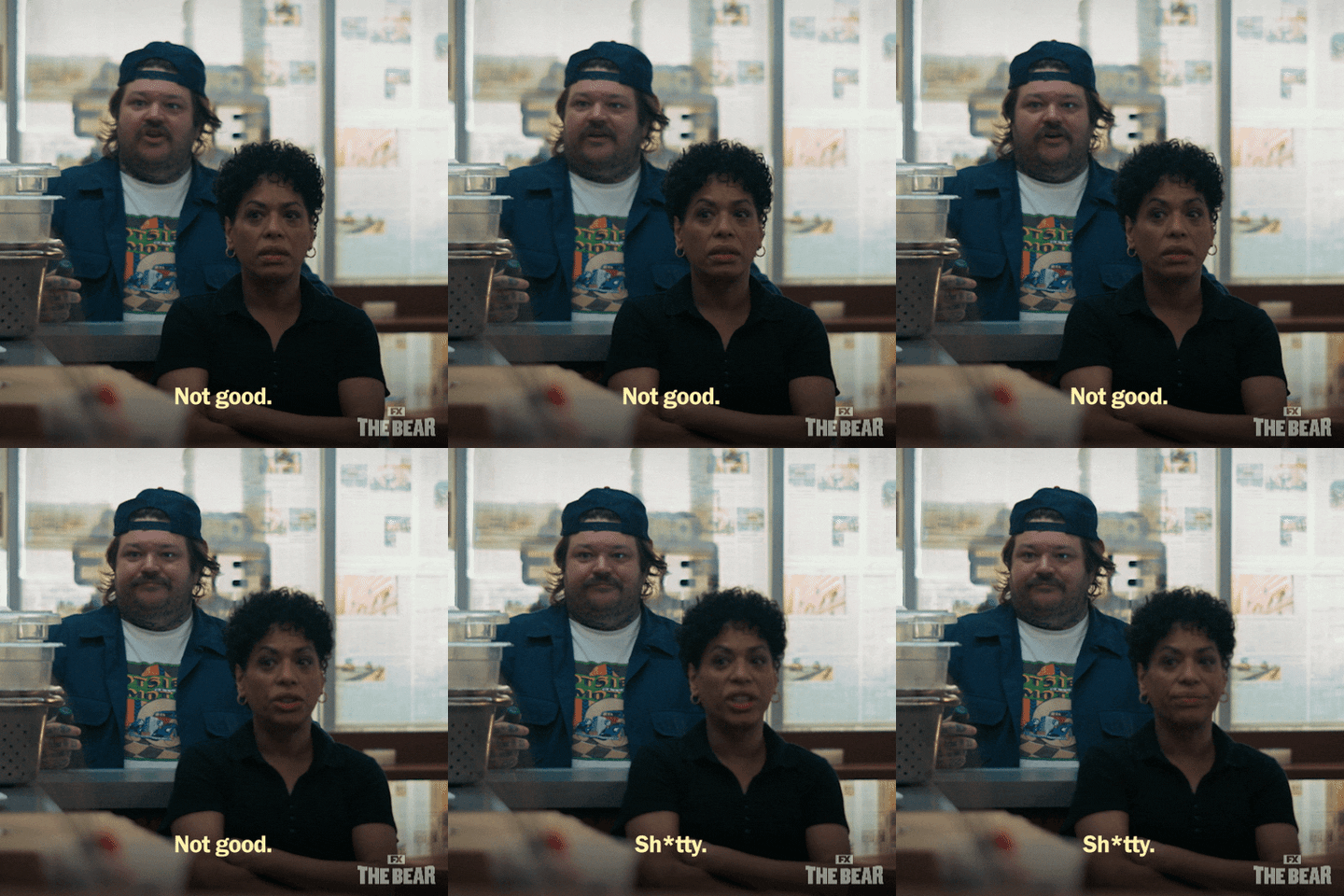
And here’s the thing that bothered me most: I knew good writing when I saw it. I’d watched great movies, read great scripts. I had good taste. But my own writing wasn’t matching it. Not even close.
The Taste Gap
Turns out, this experience has a name.
Ira Glass, host of the Pulitzer Prize-winning radio show ‘This American Life’, calls it the “taste gap.”
Talking about creative work, Glass explains that you get into it because you have good taste. Something resonated with you—a book, a film, a song—and it made you think, “I want to do that too.”
But when you start making things, what comes out isn’t good yet. “It’s trying to be good, it has ambition to be good, but it’s not quite that good. But your taste—the thing that got you into the game—your taste is still killer. And your taste is good enough that you can tell that what you’re making is kind of a disappointment to you. You can tell that it’s still sort of crappy.”
This gap isn’t just a beginner thing. It can last for years.
To demonstrate this, Glass played his own clip from his NPR days. He was 27, eight years into his radio career and already deep in the industry.
It wasn’t good. The writing was unclear, the delivery unnatural. Listening back, Glass said he couldn’t follow what he’d been trying to say.
Eight years in, and the work still wasn’t measuring up.
Why Some People Quit (And Others Don’t)
Glass says that most people quit in the taste gap. They see their work isn’t good enough and interpret it as proof they’re not cut out for this.
Yet some people keep going. They stay in the gap, keep making bad work, until eventually they get good.
It comes down to mindset. Psychologist Carol Dweck has spent decades studying how people think about their abilities, and she’s identified two distinct patterns: Fixed Mindset and Growth Mindset.
People with a Fixed Mindset believe talent is innate. You either have it or you don’t. So when their work sucks in the beginning, they think, “This proves I’m not good at this.” The taste gap for them is definitive failure.
On the other hand, people with a Growth Mindset believe skills develop over time. When their early work falls short, they think, “I’m not there yet. Let me try again.”
Dweck demonstrated this in a study with students. She gave them ten fairly challenging problems from an IQ test. Most students did pretty well. Then she praised them, but in two different ways.
The first group heard: “You must be smart at this.”
The second group heard: “You must have worked really hard.”
One group was praised for ability. The other for effort.
Then Dweck gave them harder problems. The students who’d been praised for being smart struggled. And when they struggled, they thought it meant they weren’t actually intelligent after all. As Dweck puts it, “If success had meant they were intelligent, then less-than-success meant they were deficient.”
They lost motivation. They stopped enjoying the problems. Their performance got worse.
The effort-praised students faced the exact same difficulty. But they didn’t see it as evidence of lacking intelligence. They just saw it as a sign they needed to work harder. They stayed motivated, kept enjoying the challenge, and their performance actually improved.
Closing the Taste Gap
Closing the taste gap requires creating crappy work, not seeing failure as definitive, and adopting a growth mindset.
Glass says the only way through is volume. “The most important thing you could possibly do is do a lot of work. Do a huge volume of work. It’s only by going through a volume of work that you’re going to catch up and close that gap.”
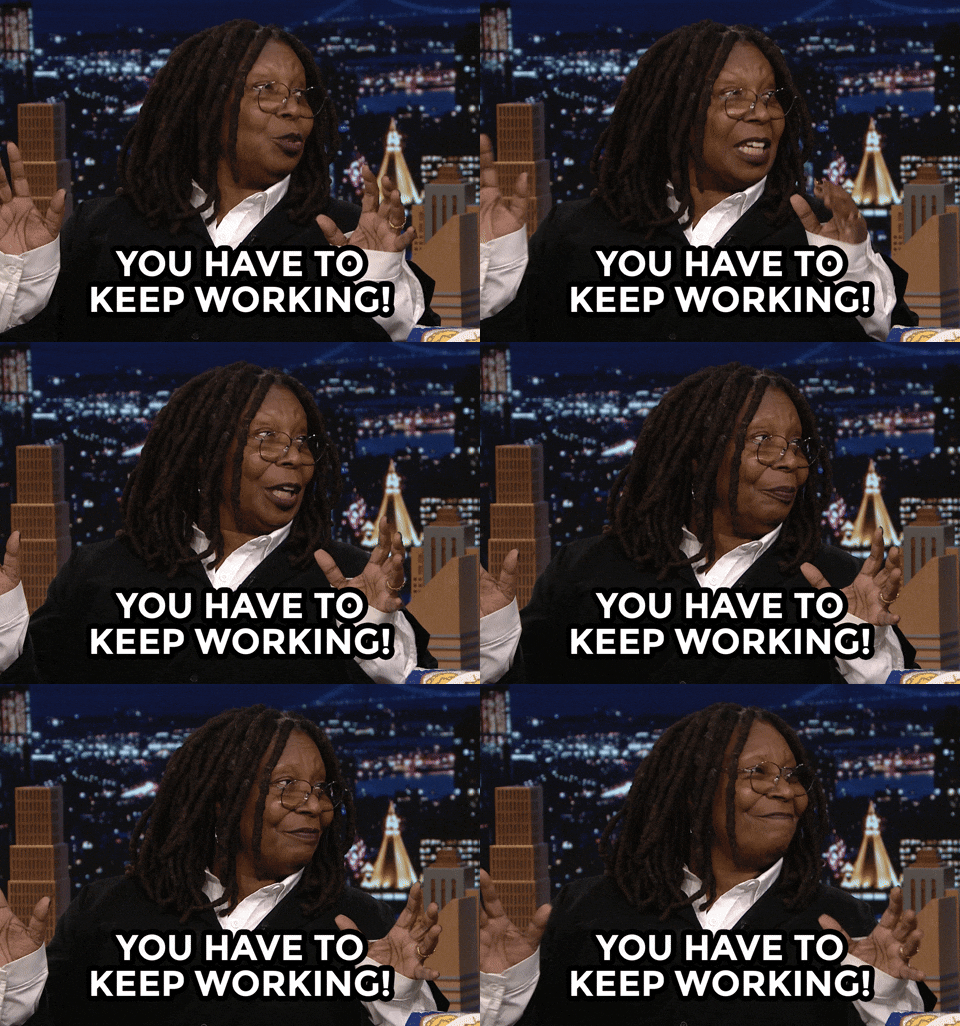
That could mean one script per year. One short story per month. One sketch per week. Pick a pace you can maintain and commit to finishing things.
Let’s keep writing. Let’s keep creating shitty work. Until eventually, it gets better.
This is something I see all the time in ambitious people stepping into roles that demand new levels of output. Their internal standards rise immediately; their skills follow slowly. The gap between the two becomes emotionally charged. Not just uncomfortable, it often feels existential.
When your nervous system is wired for performance, “not good yet” is interpreted as “not good enough,” and the body goes straight into threat mode. So people stop, avoid, overthink, or burn more fuel than necessary.
The growth mindset frame is spot on, but what helps my clients most is learning to tolerate the emotional noise of imperfect beginnings. Once that tolerance grows, creativity and consistency become much easier — not because the gap shrinks immediately, but because it stops feeling dangerous.
Question to the author
I’m curious: in your experience, what helps people stay in the taste gap without collapsing into self-criticism? Is it mainly repetition, or do you see certain emotional or cognitive shifts that keep them going?
This is so spot-on. In both clinical work and writing, I see people hit the taste gap and assume it’s a verdict rather than a phase. The mind interprets “this isn’t good yet” as “I’m not good,” and that collapse between effort and identity is exactly what shuts people down.
What you said about volume resonates, not in the hustle sense, but in the nervous-system sense. Repetition is what rewires skill, tolerance, and self-trust. The early work almost has to be bad because our taste develops faster than our ability. That mismatch is painful, but it’s also the proof that we care about the craft.
Some of my own pieces I wrote months ago make me cringe, and that used to feel embarrassing. Now it just feels like evidence I’m doing the work.
Really loved this — especially the reminder that closing the gap isn’t glamorous. It’s just showing up, writing through the discomfort, and letting the brain catch up to the taste that pulled us here in the first place.