

Let’s start today’s newsletter with a fun experiment to demonstrate how we humans are obsessed with stories and how we can invent stories even when there’s actually none.
In a 1944 experiment, a group of 34 college students in Massachusetts watched a short film featuring two triangles and a circle moving across the screen.
They were then asked to describe the scene. Interestingly, 33 of them attributed human narratives to the abstract shapes. For instance:
‘The two triangles were men fighting as a woman (the circle) tried to escape’.
‘The circle was “worried”.’
The circle and the little triangle were “innocent young things”.’
This phenomenon is called pareidolia, meaning ‘imagined perception of a pattern or meaning where it doesn’t actually exist’. It shows how we personify the abstract and seek ourselves.
Now you know why you see random objects in the clouds.
So, why do you think we love stories? Here are some reasons:
🤝 Sense of Connection
Stories have the power to bridge the gap between individuals, allowing us to see ourselves in the characters and situations presented. We connect with the struggles, triumphs, and emotions depicted in narratives.
✨ Activation of the Imagination
Stories ignite our imagination, transporting us to different worlds and possibilities. They engage our minds, stimulating creativity and encouraging us to envision new perspectives. Through stories, we can explore realms beyond our own and expand our horizons.
🎭 Emotional Impact
Stories have a remarkable ability to evoke emotions within us. They can make us laugh, cry, or feel a surge of excitement. By engaging our emotions, stories become memorable and leave a lasting impression on our minds.
Psychology Ideas to Elevate Your Storytelling
Now that we know why humans love stories, let’s take a look at three psychology ideas to elevate your storytelling:
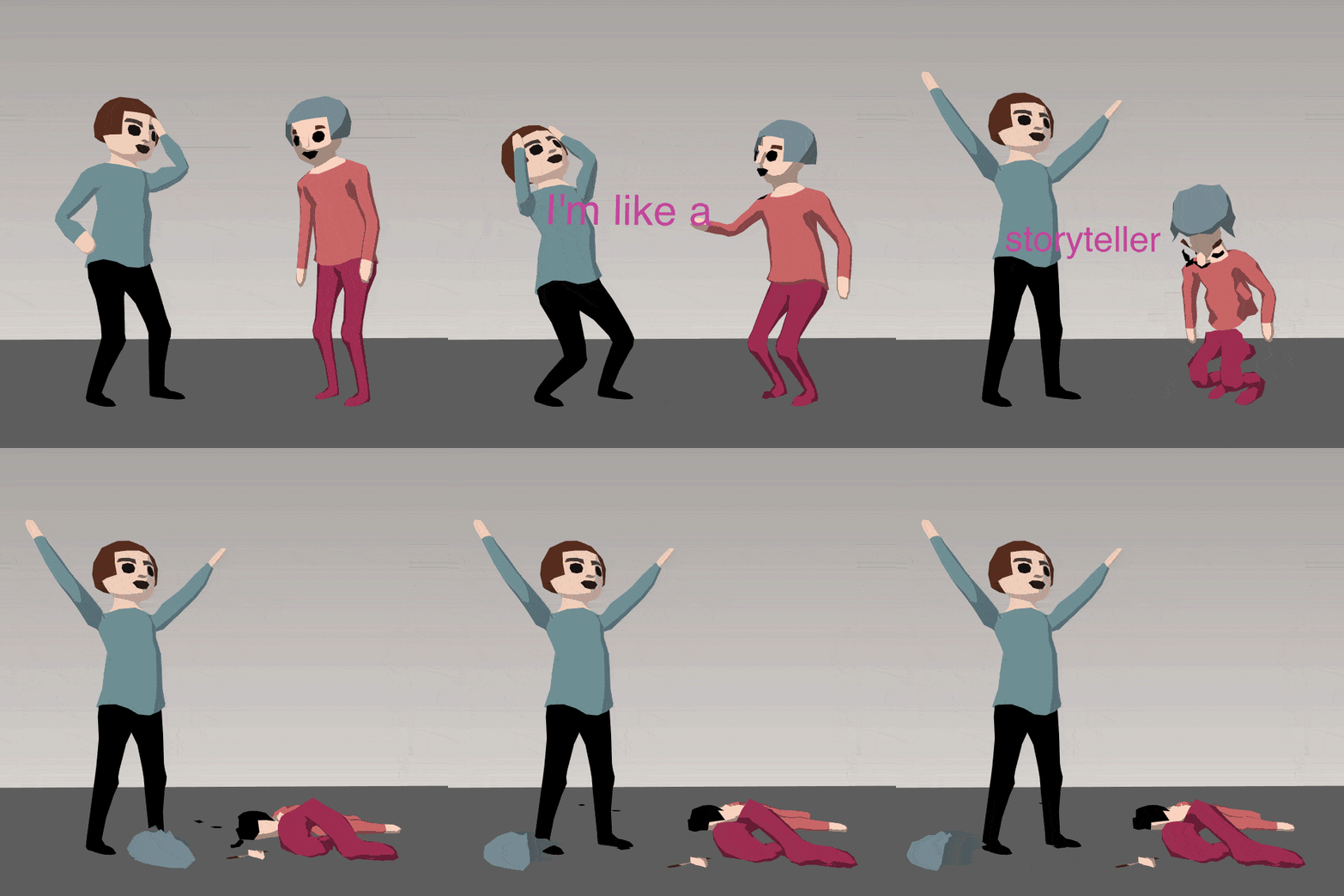
1. The Neurochemicals of Emotional Connections
Stories have the ability to stimulate the release of neurochemicals in our brains, such as dopamine and oxytocin. These chemicals are associated with pleasure, reward, and social bonding.
When you craft a compelling story, it activates the release of these neurochemicals, creating an emotional connection that makes your message more engaging, memorable, and influential.
2. Mirror Neurons: The Gateway to Empathy and Connection
Mirror neurons play a crucial role in our ability to empathize with others. These neurons allow us to simulate the emotions and actions of others in our minds.
When you tell a story that evokes strong emotions and experiences, mirror neurons are activated in your audience. They feel what the characters in your story feel. Harnessing the power of mirror neurons can help you create stories that resonate deeply with your audience.
3. Cognitive Processing: Leveraging the Brain's Love for Narrative Structure
Our brains are wired to process stories more efficiently than abstract information. Stories follow a familiar narrative structure, which allows our brains to recognize and understand them more easily.
When you present information in the form of a story, it becomes more digestible and memorable for your audience. Stories can also ensure that your message is not only understood but also internalized and retained long after the story is told.
Hope you found value in this.
Until next time,
Ahsan
I hope you continue this article. Let's dig deeper into the psychology of stories.
https://open.substack.com/pub/nwlehmann90/p/when-bodies-say-no-what-happens-when?r=3e303s&utm_medium=ios
Trying to find others who could share their thoughts on what I’ve been researching recently.