

As an introverted person, I’ve always struggled to start conversations with strangers.
But as a writer, I know those conversations reveal authentic lived experiences I could never invent sitting at my desk.
So before our Indonesia trip last month, I made myself a promise: I’d push myself to talk to as many people as possible.
Throughout the trip, I was actively trying to position myself for conversations. I sat in the front seat with drivers, asked our friendly guide about his life outside of work, and made eye contact with people while waiting instead of hiding behind my phone.
My best chance came during a 3-hour car ride from Padangbai port to Seminyak, where I found myself with a driver who spoke excellent English and seemed to have stories worth hearing.
We started with the usual small talk—my trip itinerary, the Bali traffic, how long he’d been driving. Standard stuff.
Then as the traffic forced us into long, slow crawls, the conversation started to deepen.
He asked us how we got married, what life is like in Pakistan. We asked him about his family, his kids, his time working on cruise ships as a housekeeper.

Then, almost casually, he said, “I almost had a different life, you know. Before I met my wife, I was in love with a Japanese woman.”
The story came out in pieces over the next half hour. They met when she visited Bali some 20 years ago. Despite the language barrier, they fell in love.
She visited him. He visited her when his cruise work took him to Japan.
“She wanted me to move there,” he said. “But my mother said no.”
My wife and I exchanged a look. The power of a mother over her son’s life isn’t unique to our culture.
“Does she know about you now?” my wife asked from the back seat.
“I heard something through a friend.” He paused. “She named her son after me.”
We all laughed—a surprised, slightly awkward laugh at the absurdity of it. Outside, the traffic eased as the green of Bali blurred past the window.
He was quiet for a moment, hands steady on the wheel. Then: “It’s strange, you know. Her son has my name. And my son...” He smiled, shaking his head. “My son wants to study in Japan one day. He doesn’t know the story.”
“And your daughter? How old is she?” my wife asked.
“She’s sixteen,” he said, and I could feel his entire demeanor softening.
“Are you close?” I asked.
He laughed, almost embarrassed. “Very close. My wife says I spoil her, that she has too much control over me. But I can’t help it. When she was born, I took her through all of Bali on the first day. I just wanted her to see everything.”
He was quiet for a moment. “But she’s in college now. She doesn’t talk to me the same way anymore. Doesn’t share things like before. It’s normal, but...” He didn’t finish. I could see tears gathering in his eyes.
We didn’t push further. The conversation drifted to lighter things—the best beaches in Bali, where to eat in Seminyak. By the time we reached our hotel, he was smiling again, helping us with our bags.
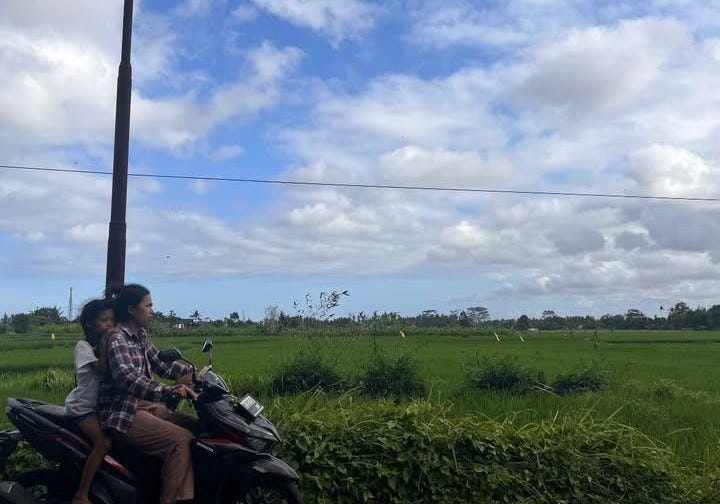
Bali, Indonesia, 2025
—
I kept thinking about that conversation long after we’d checked in. Not just the story itself, but what it revealed about him as a person.
A man who loves his mother and resents her power over him in the same breath. Who grieves a lost relationship while being devoted to his current family. Who adores his daughter to the point of tears while knowing his wife thinks it’s unhealthy. Who can laugh and cry about the same situation within minutes.
One three-hour conversation doesn’t mean I truly know this man—his full story, his daily reality, the thousand other contradictions he carries. But it gave me something just as valuable: a glimpse into how a real person holds multiple truths at once.
This is what talking to strangers gives you—an expanded emotional vocabulary and access to psychological complexity you can’t get sitting at your desk imagining “what people are like.”
Real humans contain contradictions. They express universal feelings through their specific cultural frameworks, life choices, and personal histories. That texture is what makes the writing feel real.
Writing teachers say “show, don’t tell.” But first, you have to listen.
Bravo! Beautifully stated! And what an encouragement to other introverts (like me!) to step outside of their comfort zone and into authentic connection. 🥰
This advice is true. I am an introvert as well and work retail. I force myself to make connections with people. It has helped me tremendously. Thank you for sharing this beautiful piece ❤️